











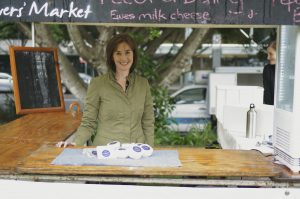


I wonder if anyone has measured our responses to face-to-face human acknowledgement and ‘likes’ on social media and compared them. I imagine that the real human acknowledgement would have a longer lasting effect.
As a philosopher, young Karl Marx learned that work was an aspect of being human. He became an economist in fury that work was being systematically torn from our personhood to serve industries. His intellectual and political inheritors have mostly sought to limit this incursion, to protect the person from the world of work. Which wasn’t quite the point. Meanwhile all around us people bolt because the work is even more important than the money.
As a food tourist my strategy was simple: try lots of things and keep track of the names of the ones I like. Faced now with time to explore the diversity of Italy at leisure, I suddenly felt that I should be doing more than trawling for things I like. I should know why I like them.
I marvel at Gorey’s wallpaper, Hopper’s shadows, Louis Comfort Tiffany’s colors, Al Hirschfeld’s space, Saul Steinberg’s simplicity, and Joel Rosenthal’s ability to make diamonds look like dust.
The FoodTech world is fatally out of touch with the food world. In the food world people consume at least as much food porn as meals, spend their free time closely observing chefs making things by hand, and take an added pleasure in reading about food, cooking, and restaurants. It’s a hot journalistic category. Two crucial sensations in the pop culture passion for food are pleasure and power. The pleasure importantly can be mediated and digital, not only sensory. Food gives us other pleasures than taste.
Food is a focal point for the struggle of meaning against machine. Food’s meaning comes from context, the very context which commodificationEconomic philosopher Karl Marx used the term 'commodification' to describe the process by which a product's value is transformed from usefulness to market value. Commodification is the financial premise of middlemen and retailers, who gain their profit by the gap between the costs they pay and the price at which they sell. It is in their interest to increase this gap and to obscure it. More destroys or conceals.
If we can have exactly what we want, in the size and color we want, with a small modification, a lot of our retail expenditures will fall away, as will surely some of the ability to manipulate buying preferences, and, hopefully, wasteful overproduction.
The passionate serving staff did provide lectures about the commitments to culture, region, and producers. But we were hungry, and unfilled by lectures.
These demonstrations are found by his own research, conversations with product engineers, and through Germany’s network of 300 repair cafés, where participants find the same problems over and over, and take products apart to understand what has gone wrong.
Today my beloved MacBook Pro fried its logic board. This is a common problem with the 2007-2011 MacBooks, to the point that Apple was fixing
Local Objects, the exhibit, is a small collection of opportunities to find sensuality and relationship in artisan objects through touch and artisans’ stories. It is designed to create a deeper level of meaning with these objects and the desire to bring these experiences into your own transactions.
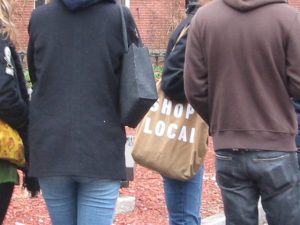
It means choosing re-upholstery at a local shop, although you might be able to get a new chair cheaper. Look for tradesmen in your area and broken stuff in your house that could be repaired.
Musicians, hackers, and writers and assorted creatives love making stuff and they want to share it, but the internet makes everything free, or below the
New perspectives on materialism have generated lots of different words… SLOW (Slow Food, Slow Cities, Slow Life…) is “seeking to do everything at the right
They’re diluting the olive oil with canola to save money. I paid $14 for the feta and now I’m furious. Charge me more, but don’t cut corners.
This is a story is about falling in love with food. It’s about working for something because it’s beautiful, and hoping the money will be enough to keep doing it – a story that I keep running into while distractedly turning a corner. It’s about a search for meaning in the money, connection in the contract.
If the regard that many people now have for the wider ramifications of their food choices could be brought to our relationships to our own automobiles, it could sustain pockets of mindful labor
The professions maintain the status quo through the work they define and permit. In the social sciences it is publishing highly specialized articles in elite journals. In medicine it is “patching people up…never to take a stand against the social inequities that generate so much stress and disease.”